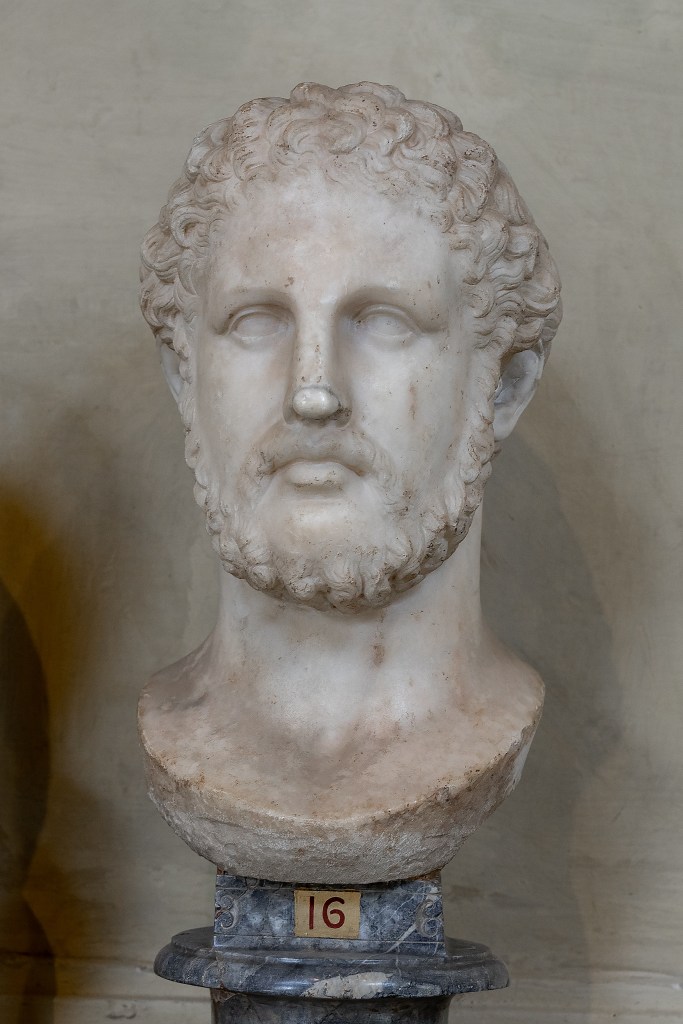
In 334 BCE, Alexander the Great crossed into Asia to begin his invasion of the Persian Empire. Reluctant to intervene, Darius III left matters to his Satraps, dooming them in the Battle of the Granicus. So. It. Begins. Download
It’s time to turn back the clock – just a bit – and see what King Philip II of Macedon was doing over in eastern Europe while the Persians were busy with Egypt, rebels, and succession crises in the mid-4th Century BCE. Download
Darius III(?) depicted on the unfinished tomb in Persepolis South via Livius.org
Darius III was handpicked by Bagoas the Elder to succeed Artaxerxes IV, but Bagoas realized his mistake too late. Darius was no puppet king. He seized the reigns and set to work stabilizing the Persian Empire, bringing them back from the brink of annihilation. Download
Possible depiction of Prince Arses on a Mysian coin via Wikimedia Commons
After conquering Egypt, Artaxerxes III got to work ruling his empire. New buildings rose on the Persepolis terrace. Overly ambitious Macedonians had to be managed. A host of young princes needed to be trained, but wait… does this wine taste off to you, Bagoas? Download
An Egyptian coin depicting Artaxerxes III as Pharaoh via Wikimedia
Even after disarming the western satraps, Artaxerxes III had his hands full in the west. It was time to retake Egypt, but that was easier said than done. Download
Artabazos II as depicted on his own coinage via Wikimedia
The final years of Artaxerxes II were filled with turmoil and sadness, but when his son Ochus rose to power as Artaxerxes III, the Persian Empire entered a new age. The new Artaxerxes set out to repair and remake the empire as his own. Download
A column base from Hamadan (Ecbatana) where Artaxerxes II invokes Ahura Mazda, Mithra, and Anahita via Livius.org
As we approach the end of Artaxerxes II, it’s time to talk about his gods. All of a sudden, Anahita and Mithra began appearing alongside Ahura Mazda in royal inscriptions, but it turns out it may not have been so sudden after all. Download
A gold stater minted by Orontes during his time in Mysia, featuring his own portrait via Wikimedia
After years of quietly building up their strength, Ariobarzanes’ and Datames’ rebellion was out in the open, but unbeknownst to them, not all of their supposed allies were ready to abandon the Empire. Meanwhile, Greece and Egypt were both on the verge of war once again. Download
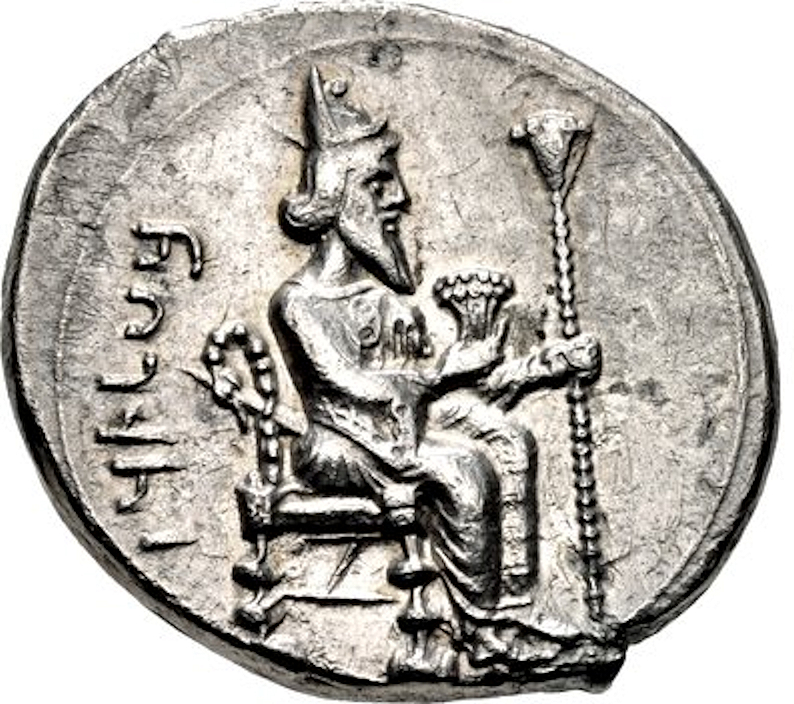
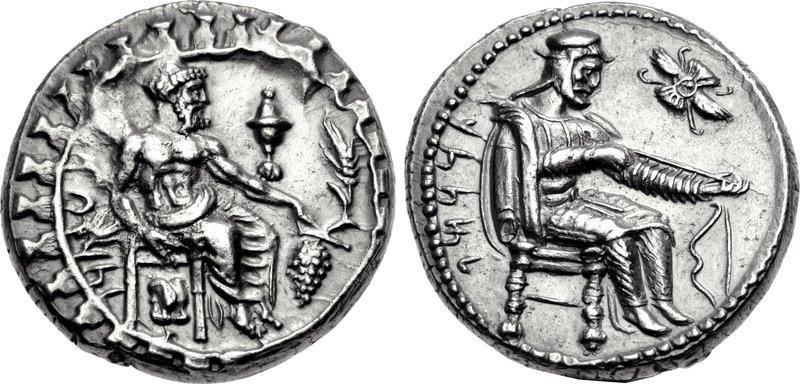
A silver coin minted by Datames in Cilicia showing the rebel satrap with a faravahar (R) and the Cilician god Baaltars (L) via Wikimedia
As his generals struggled against Egypt, Artaxerxes dealt with their failures harshly – so harshly that his newest commander in the west rejected the Empire altogether. Fearing for his life whether he invaded Egypt or not, Datames quietly raised the rebel and tried to take all of Anatolia with him. Download