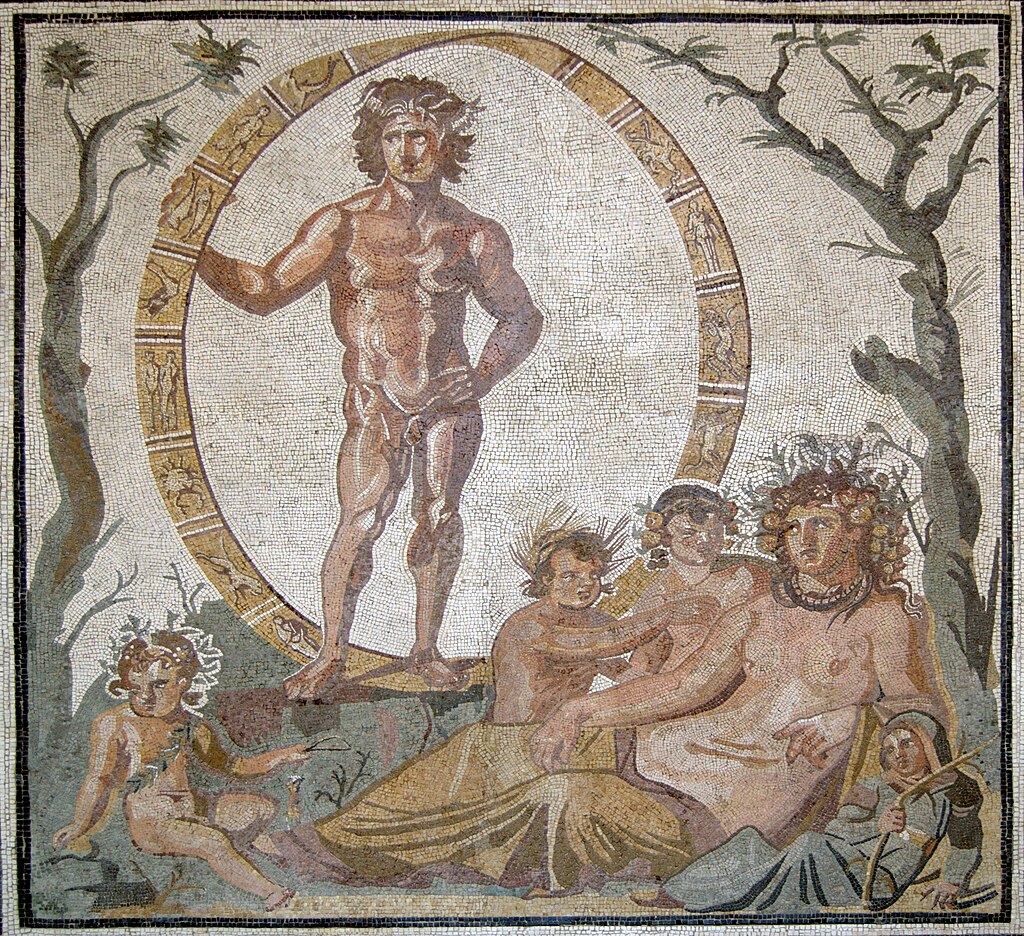
Mosaic depicting Aion, a Hellenistic time god associated with Chronos, Zurvan, etc. via Wikimedia
To wrap up our series on Orphism and its connections to Hellenistic Iran, it’s time to discuss Zurvan, the Zoroastrian yazata of Time, and his growing cult in the Hellenistic Age. Download
The Ancient Greeks had many ideas about the origins of the universe and humanity over the centuries. The best known is probably Hesiod’s Theogony, but the Orphics developed many of their own versions of the story. Today, we explore some of those competing ideas about the dawn of Time. Download
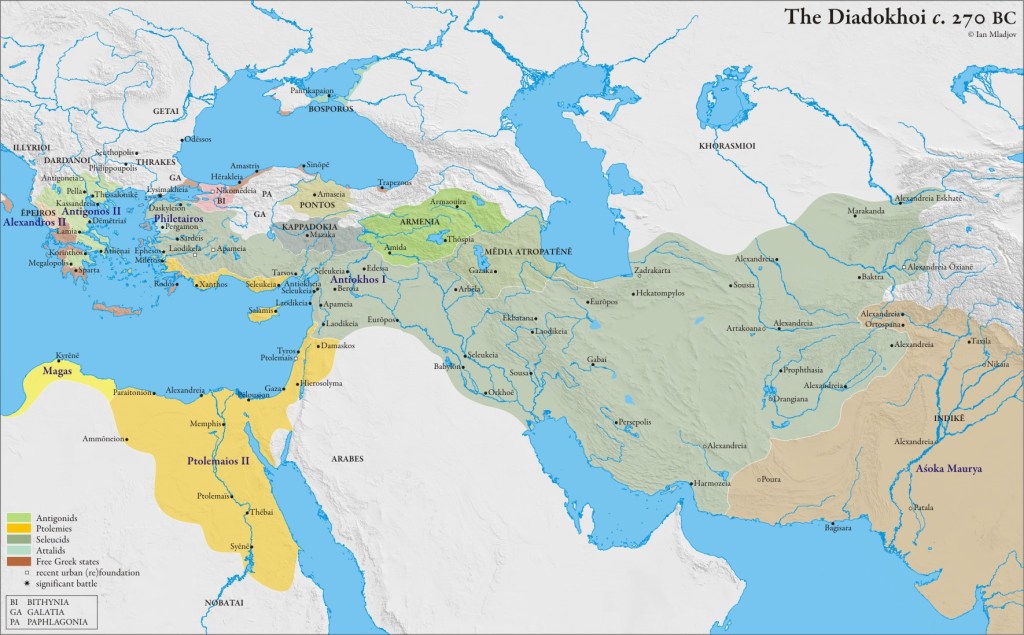
By the time Seleucus Nicator was murdered, he had reunited much of Alexander the Great’s Empire, but the northern and southwestern edges of the imperial map were rapidly filling in with new, smaller kingdoms and confederations. From Chorasmia to the Cimmerian Bosporus, and from Bithynia to the Nabataean Arabs, this episode gives a brief overview of the smaller successors to Alexander and Darius. Download
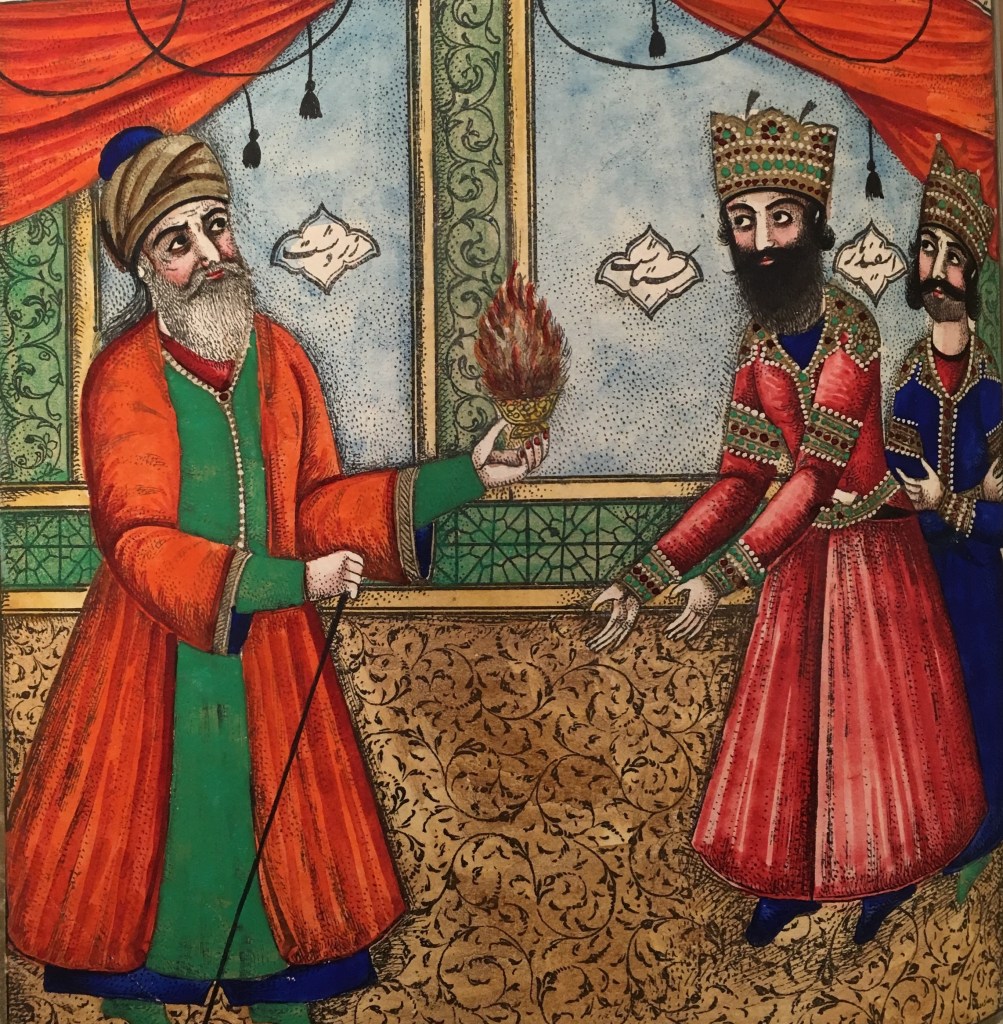
Zoroaster and Vishtaspa depicted in the Bombay Shahnameh, 1849.
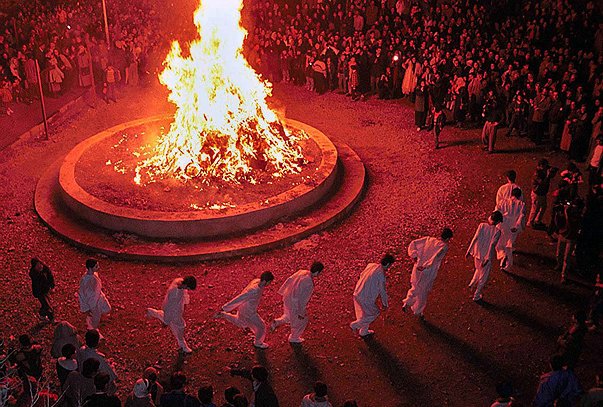
According to tradition, the prophet Zoroaster died at 77 years and 40 days old on Khorshed Dae AKA December 26 (depending on who you ask). Let’s talk about it. Download
Trevor and Aurora from Swords, Sorcery, and Socialism found the perfect crossover episode with Creation by Gore Vidal: a historical fiction novel set in the 5th Century BCE that follows a fictional descendant of Zoroaster on his worldwide journey to understand the mysteries of the universe. Download
This is audio from the live event with Sariel and Umberto from So You Think You Can Rule Persia last year. I wrote a wildly over complicated Choose Your Own Adventure script about alternate histories if Cyrus the Younger defeated Artaxerxes II. Download
You, the listeners of this very podcast, are phenomenal, thoughtful, inquisitive people. So I have done my very best to answer your many, many questions about the Achaemenid Persian Empire, Alexander the Great, and myself. Download
Humay Chehrzad, the Kayanian Queen, illustration by Jalal al-Din Mirza Jelveh Yazdi, 19th Century
After the conquests of Alexander the Great, the history of the Achaemenids slipped into legend, myth, and obscurity. By the 6th Century CE, the likes of Cyrus the Great, Darius the Great, Xerxes, and Artaxerxes had been all but forgotten in Iran. Instead, the Sassanid Persian Empire remembered the stories of great heroes from the Avesta, occupying the equivalent of the Achaemenids’ place in history. Download
Iskandar (Alexander) comforts the dying Dara (Darius III-ish), illustrated Shahnameh 1604
In the centuries following Alexander the Great’s conquest of the Persian Empire, Iranian cultural memory changed and shifted, often in strange and unexpected ways. Alexandros Megas ton Makedon was remembered as Gizistag Iskandar-i Rhomiyag – the Accursed Alexander of Rome. Download