95: The Holy Trinity

A column base from Hamadan (Ecbatana) where Artaxerxes II invokes Ahura Mazda, Mithra, and Anahita via Livius.org

As we approach the end of Artaxerxes II, it’s time to talk about his gods. All of a sudden, Anahita and Mithra began appearing alongside Ahura Mazda in royal inscriptions, but it turns out it may not have been so sudden after all.
Download

2022 Holiday Special: Mithra and Mehregan

Patreon Support Page STORE 

Twitter Facebook Instagram

92: Family Ties

A 4th Century BCE stele from Dascyleium depicting a Persian woman and her servants via Wikimedia

It’s time to take a step back and see what the royal family was up to in the decades following Cunaxa. Artaxerxes II married his daughters, meaning its time to discuss the controversial subject of Xwedodah. Then, it’s on to a bloody conflict in the shadows as the royal princes battle for their succession rights.
Download

Moment.co/HistoryOfPersia – Live Event Tickets Now!

So You Think You Can Rule Persia

Patreon Support Page STORE 

Twitter Facebook Instagram

2022 Mehregan Holiday Special!

An Achaemenid-inspired Mehregan table from the Netherlands via Wikimedia Commons

Jashn-e Mehregan mubarak everyone! This year’s roving holiday special is all about the traditional Feast of Mithra and the yazata it honors. Grab some sharbat, maybe a bowl of pistachios, and settle in for festivities ancient and modern with a healthy side of all of Mithra’s awesome and badass jobs in the cosmos.
Download

Vulgar History – Listen Now!
Apple Spotify RSS Website

Patreon Support Page STORE
Twitter Facebook Instagram

77: The Yashts

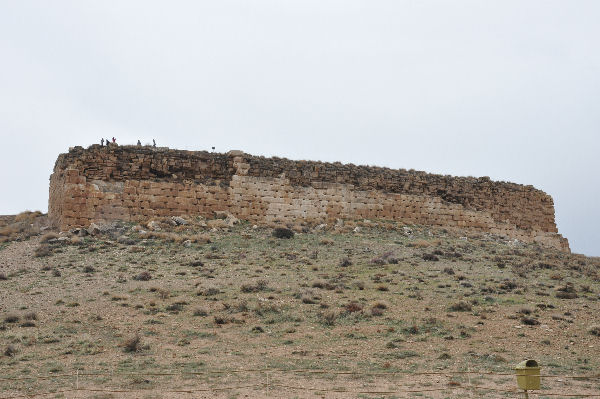
Tall-e Takht, near Pasargadae, possibly the ruins of an Achaemenid-era sanctuary/temple via Livius.org

A collection of early Zoroastrian prayers to the various Yazatas, the Yashts are some of the only surviving sources that provide a detailed window into the more polytheistic aspects of ancient Iran. As a bonus, they partially stem from myths and legends as told in the Achaemenid period.
Download

Merch On Sale Now! Go to HistoryOfPersia.LaunchCart.store

Patreon Support Page | STORE
Twitter Facebook Instagram

60: Given Against The Demons

The Vendidad is a strange and unique document. It’s one part mythology, one part law code, and one part ritual manual. A collection of phrases and verses from a partly remembered oral tradition were composed at point A, strung together at point B, and written down at point C, all seemingly centuries apart. Dogs are great. Tortoises are not. Otters are the best. Flies are the worst. Strap in, and Do. Not. Hurt. The Water Dogs.

Dogs are sacred, so you’re absolutely getting pictures of my sacred “house dog.”
Download

300: Rise of An Empire Review Part 1
Part 2

In The Words of Zarathustra

Patreon Support Page
Twitter Facebook Instagram

59: Holy War

An Old Persian copy of the Daiva Inscription discovered at Persepolis, via Livius.org

Early in Xerxes’ reign, an infamous and dramatic story of religious conflict was inscribed at Persepolis. When Xerxes became king he put down a rebellion, but in the process encountered a community dedicated to a god or gods he considered false and immoral. As consequence he destroyed their sanctuary and worshiped Ahura Mazda in their place.
Download

Support on Patreon

Livius.org

Avesta.org

UT Austin Old Iranian Languages

300: Rise of An Empire Review Part 1
Part 2

In The Words of Zarathustra

Patreon Support Page
Twitter Facebook Instagram

Episode 45: Xerxes Porphyrogennetos

The Tomb of Darius (top left), the upper register of Darius’ tomb (bottom left), and a possible relief of Xerxes (right) via Wikimedia Commons

In 486 BCE, Darius the Great died and passed the Persian Empire on to his son, Xerxes. With plans to invade Greece in development, and Egypt in open revolt, the Achaemenid house had to pause and deal with the succession. Darius became the first king entombed at Naqsh e Rostam while Xerxes competed with his elder half-brother for power.
Download

50! Q&A Contact

Patreon | Support Page | One-time Contribution

Episode 44: Also Sprach Zarathustra

This is the second part of the two-part discussion on the life and times of Zoroaster. This time, I discuss the Zoroastrian conception of reality and how it is portrayed in the Gathas as well as the legacy of Zarathustra in Zoroastrianism, Iran, and Europe.
Download

Zoroastrianism: An Introduction by Jenny Rose

Patreon Support Page
Twitter Facebook Instagram